
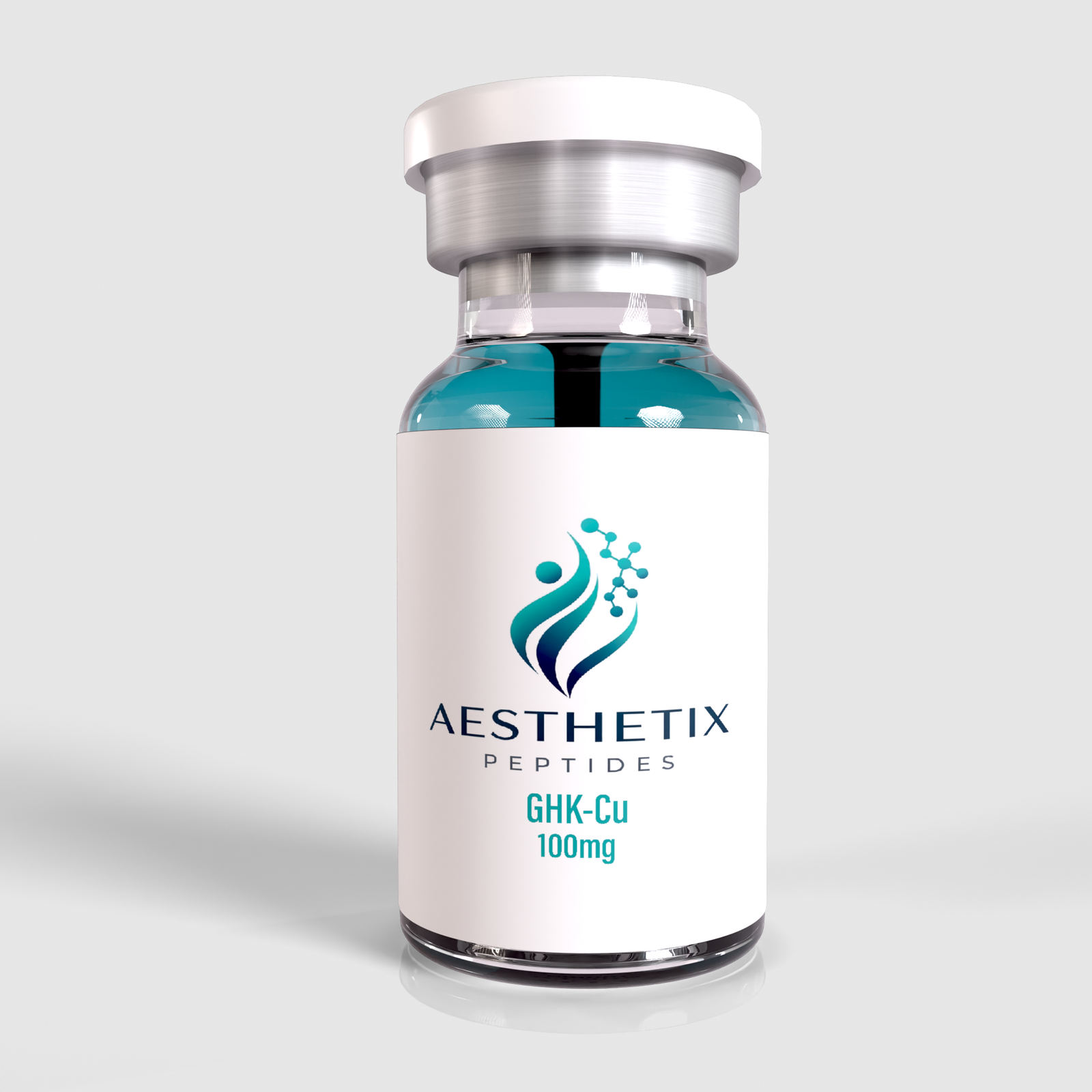

GHK-Cu 100MG
GHK-Cu (Glycyl-L-histidyl-L-lysine copper complex) is a peptide-copper conjugate widely studied in academic and industrial research settings. This product is intended exclusively for use in scientific investigations, bioanalytical studies, or biochemical experiments. Below are key details regarding its formulation, research applications, and context within biochemical studies.
Research Context
GHK-Cu has emerged as a focal point in the study of cellular and extracellular matrix remodeling, wound healing, and tissue regeneration. Its copper-binding properties enable targeted interactions with extracellular matrix proteins such as fibronectin and collagen, influencing processes like angiogenesis and matrix degradation. Research has primarily focused on its application in in vitro models, cell-based assays, and animal studies designed to elucidate mechanisms rather than therapeutic outcomes.
Research Overview
The GHK-Cu peptide complex was initially identified in human serum and later synthesized for research purposes. Its copper coordination facilitates its ability to traverse cellular membranes and extracellular spaces, enhancing bioavailability and bioavailability in biological systems. While early studies investigated its role in wound healing, more recent research has expanded to include roles in cardiovascular biology, tissue repair, and even antimicrobial studies. The compound’s stability, solubility, and controlled release characteristics make it a valuable tool for biochemical research.
Key Research Focus Areas
- Wound Healing and Tissue Repair: GHK-Cu is extensively studied for its potential to accelerate wound closure, promote granulation tissue formation, and reduce scarring in both in vivo and in vitro models.
- Extracellular Matrix Modulation: Research explores GHK-Cu’s effects on fibronectin and collagen deposition, influencing processes such as angiogenesis and matrix remodeling in diseases like diabetes or neurodegeneration.
- Antimicrobial Activity: Copper coordination in GHK-Cu has shown antimicrobial properties against bacteria and fungi, with potential applications in infectious disease models.
- Biocompatibility and Pharmacokinetics: Studies examine its tissue distribution, clearance rates, and interactions with endogenous proteins, which are critical for assessing safety and efficacy in research environments.
- Biomarker Development: GHK-Cu is being investigated as a tool for detecting and quantifying extracellular matrix remodeling, potentially serving as a biomarker for various physiological and pathological conditions.
Safety and Compliance
This product is provided for research purposes only and should be handled with caution. GHK-Cu is a copper-peptide complex that may exhibit toxicity at high concentrations or in improper experimental contexts. Researchers are advised to follow standard laboratory safety protocols, including appropriate disposal procedures for biological waste and copper-containing solutions. The formulation is designed for use in controlled, academic settings only.
For research use only. Not for human or animal consumption.
Reviews
There are no reviews yet.