
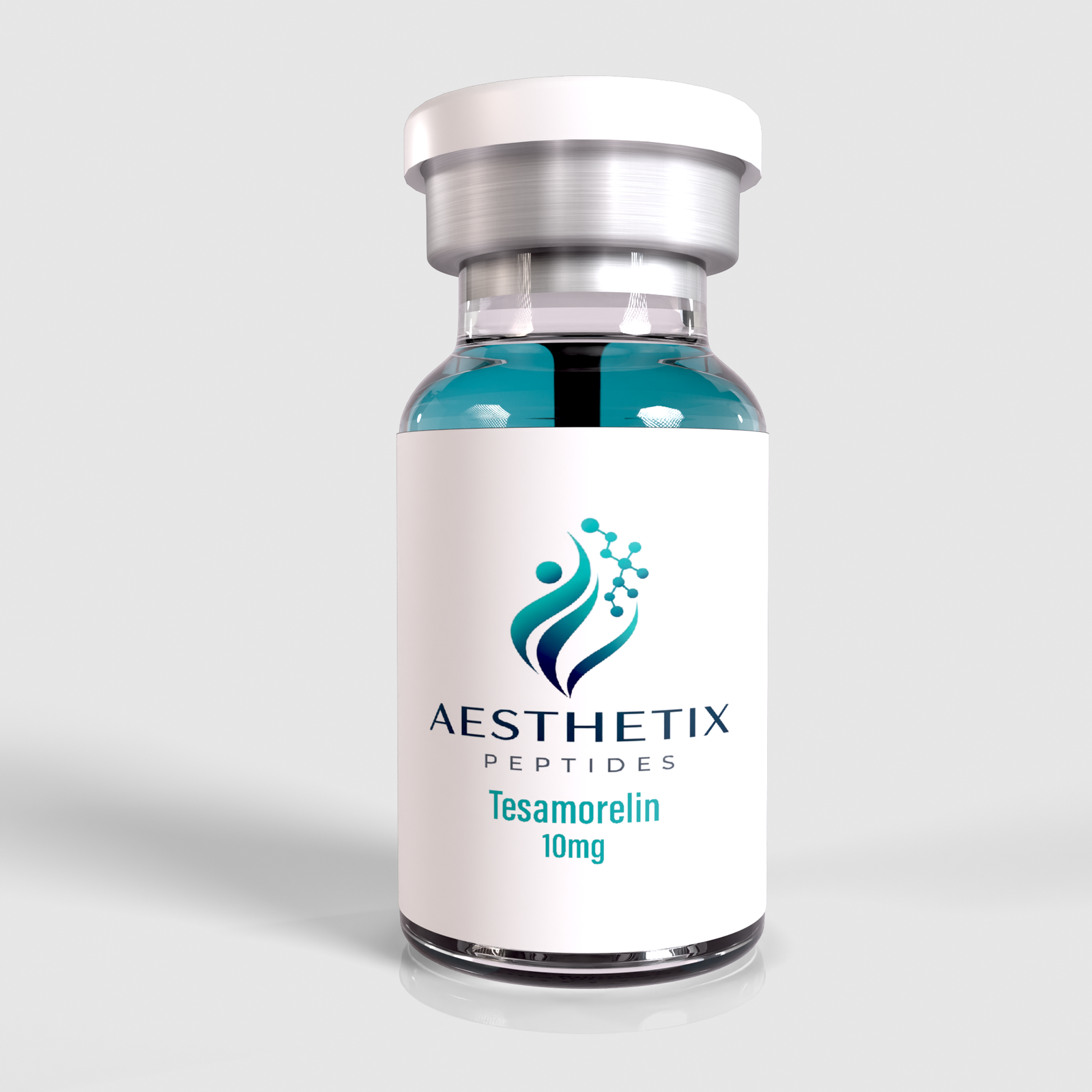

TESAMORELIN (10MG)
Tesamorelin is a synthetic peptide designed for research applications within the field of peptide chemistry and biological sciences. This compound is characterized by its potential to influence specific biochemical pathways relevant to studies on growth factors, hormone interactions, and neuroendocrine regulation. Below is a detailed overview of its research context, applications, and significance.
Research Context
Tesamorelin is structurally related to somatostatin analogs, a class of peptides that have been extensively studied for their modulatory effects on growth hormone secretion and related endocrine processes. While not identical to naturally occurring somatostatin, its design may permit unique interactions with receptors in experimental models, offering researchers new avenues for investigation into physiological and pathological mechanisms. Given its chemical structure and potential biological activity, tesamorelin is often explored in preclinical studies to assess its effects on cellular proliferation, hormone release, and tissue remodeling.
Research Overview
Tesamorelin’s research applications primarily revolve around its potential to act as a selective or allosteric modulator of peptidergic signaling pathways. Preclinical studies have demonstrated its utility in exploring:
endocrine regulation, particularly in models where growth hormone and insulin-like growth factor (IGF) interactions are being examined. Additionally, its effects on gastrointestinal motility and pancreatic hormone secretion may be of interest in studies focused on metabolic health and pancreatic physiology. Due to its structural and functional similarities to other somatostatin derivatives, tesamorelin may also be useful in investigating the pharmacodynamics of peptide-based therapeutics.
Key Research Focus Areas
- Growth hormone and IGF axis modulation: Investigation of tesamorelin’s influence on growth-related signaling pathways, including its potential effects on cell proliferation, tissue differentiation, and bone formation in experimental models.
- Pancreatic and endocrine function: Evaluation of tesamorelin’s impact on insulin secretion, glucagon release, and pancreatic beta-cell function, particularly in diabetic or metabolic disease research.
- Gastrointestinal motility studies: Examination of its effects on gut hormone release, smooth muscle contractility, and enteric nervous system activity, which may have implications for gastrointestinal disorders.
- Neuroendocrine research: Assessment of tesamorelin’s potential interactions with hypothalamic-pituitary axes, including its role in modulating stress responses or adaptive physiological changes in animal models.
- Pharmacodynamics of peptide analogs: Comparison of tesamorelin’s biochemical properties with other somatostatin derivatives to better understand receptor specificity, binding affinity, and metabolic clearance.
Safety and Compliance
Tesamorelin is supplied for research purposes only and is not intended for use in humans or animals. Research use should be conducted in accordance with institutional guidelines, ethical standards, and regulatory requirements governing laboratory activities. Users are responsible for ensuring compliance with all applicable laws, including those related to chemical handling, waste disposal, and experimental safety protocols. Proper documentation, record-keeping, and peer review are essential to ensure the integrity of research involving tesamorelin.
This product is designed solely for academic and scientific investigation. Any unauthorized use may be in violation of legal and regulatory standards.
For research use only. Not for human or animal consumption.
Reviews
There are no reviews yet.